The trigger
The first idea let people join a game in progress remotely.
The call
You can’t join a pool game from your couch. It became information only: see what’s on tonight, with no join button at all.
"I think you missed my turn."
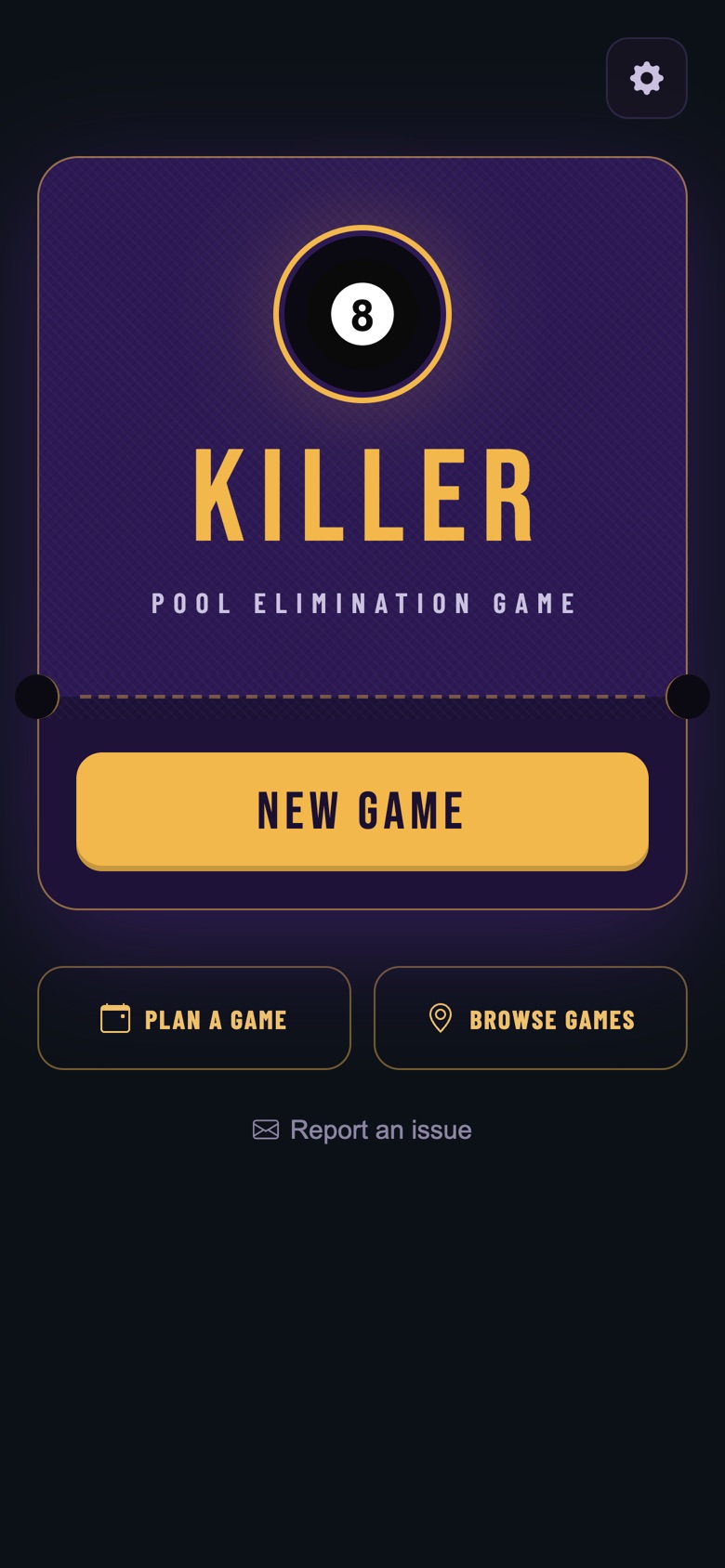
Killer is made for a crowd: many people in one game at the same time, so it's purely social. Many pool halls run Killer Nights to bring people in on slow nights. Classic Killer runs on paper and playing cards.
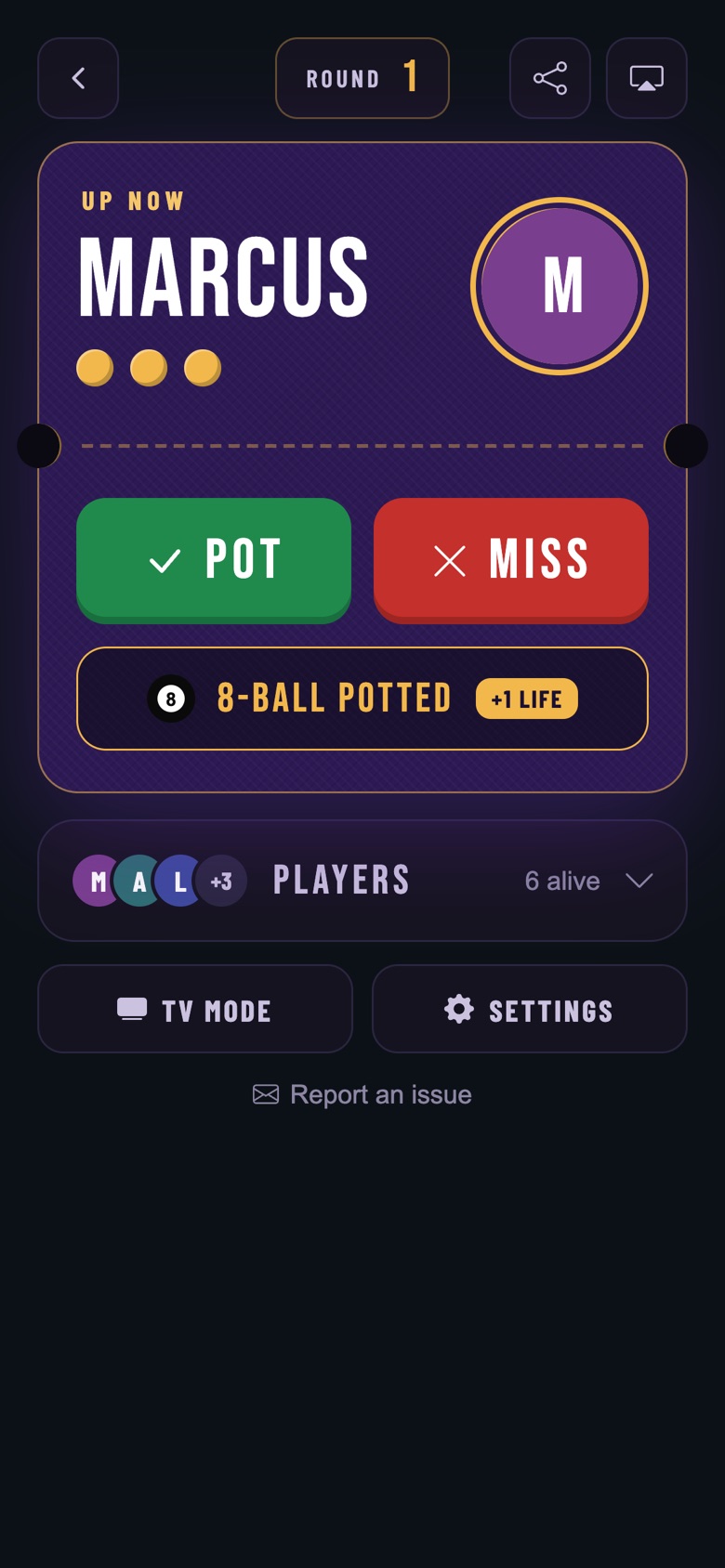
Cards get forgotten, missed or lost. Turns get argued about. And one organizer carries all of it: the board, the cards, the pot, and every "wait, whose turn is it?"
One game, set up for either crowd: lives, house rules, entry fee and draw cards change per group, so the same app runs a money night and a casual night.
So it's a setting, not a rule: Public turn info lets the organizer hide or show who's next for each game.
I initiated the product, defined its functionality, designed the user experience and interface, and made the key product decisions throughout development. I used AI-assisted development to build, test and iterate on the application, validating decisions in a real pool-hall environment.
I defined what to build, evaluated alternatives, reviewed AI-generated code changes and tested the application in real-world conditions. The code itself was generated by Claude Code, not written by hand. This let me iterate quickly while remaining responsible for the product's functionality and user experience.
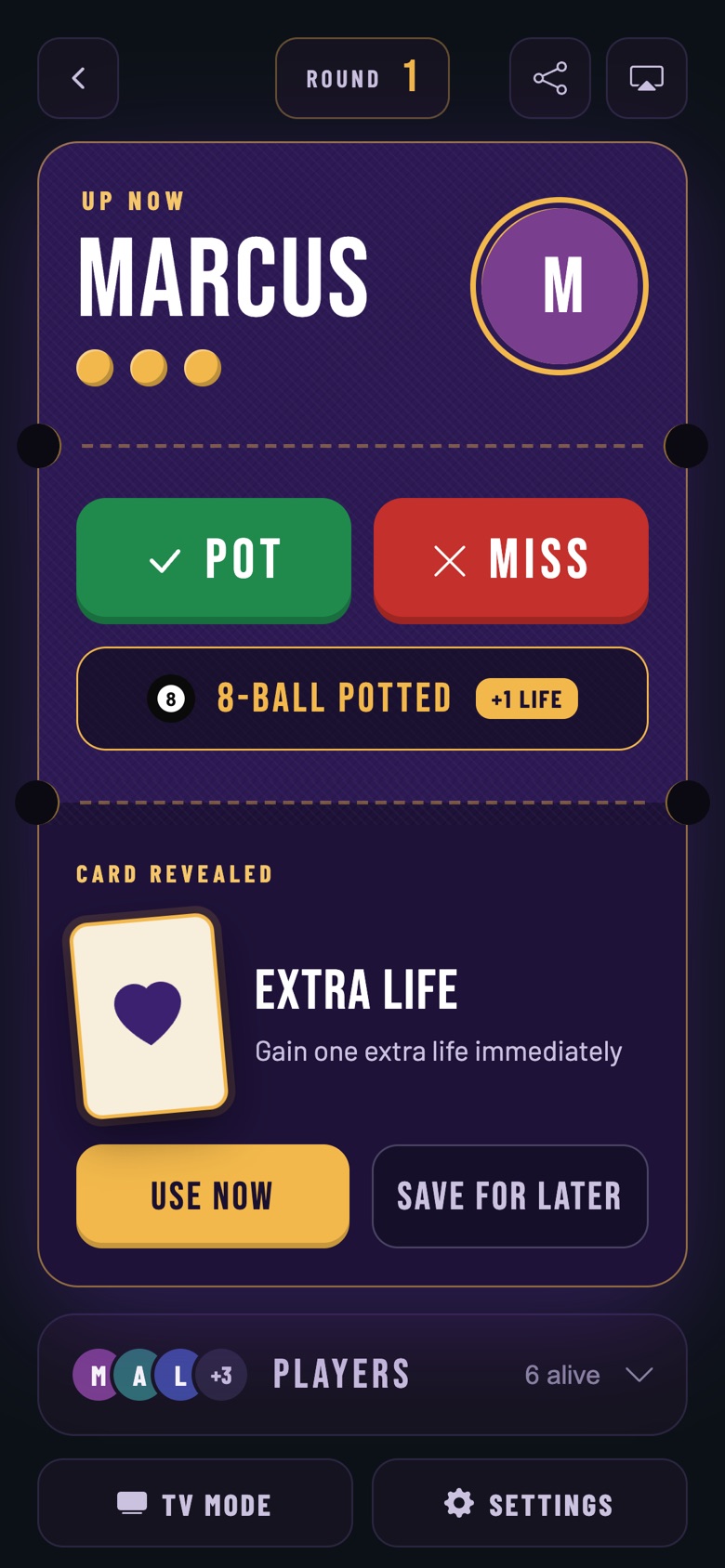 A card revealed mid-turn
The TV screen I loved looked like a poster: one tall, slow, scrolling list, gold on deep purple. Then I ran real games with it, and the room kept asking me the same thing: “Who’s playing next?” Nobody remembers how many lives they have. They glance up, and if the answer isn’t there in one glance, they ask the person with the phone.
So the TV isn’t my screen shown to the room. It’s the room’s scoreboard, read from three metres away by people who are half-listening and looking for one thing: am I next, and am I still alive? Every decision after that answered one question: can you read it from across the room?
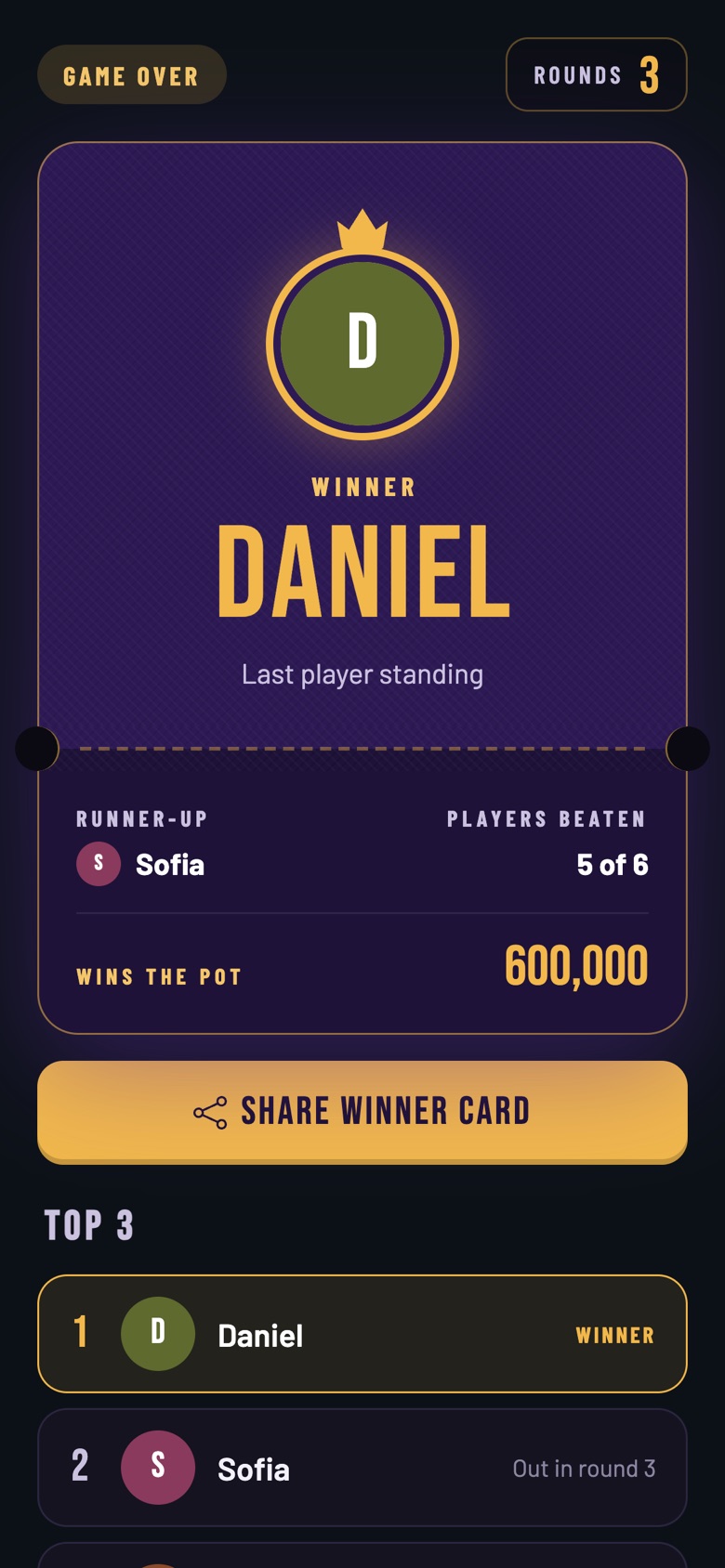
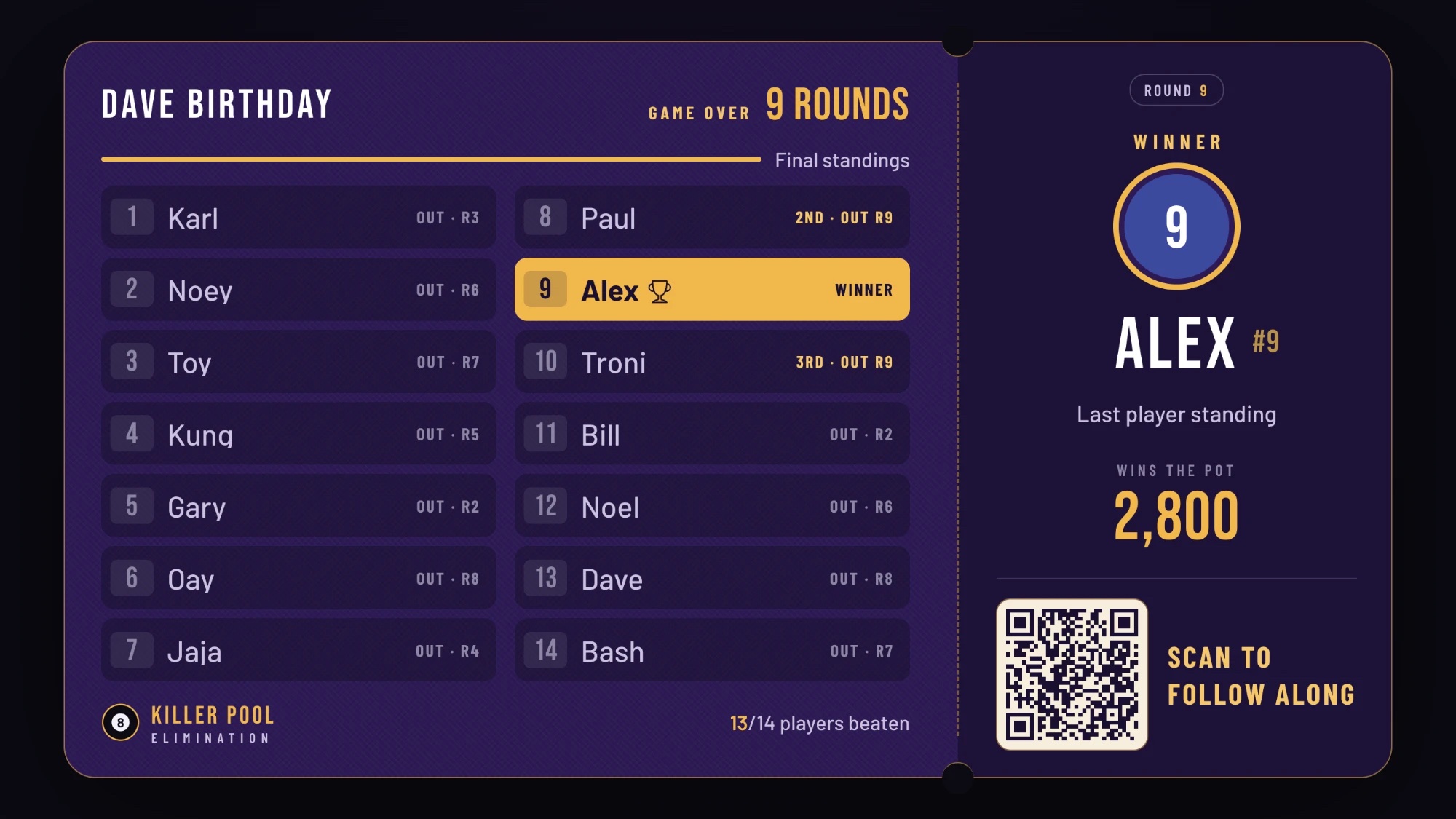 Now: the TV at the end of a 14-player game, v1.4. Every player numbered, in order, with the round they went out
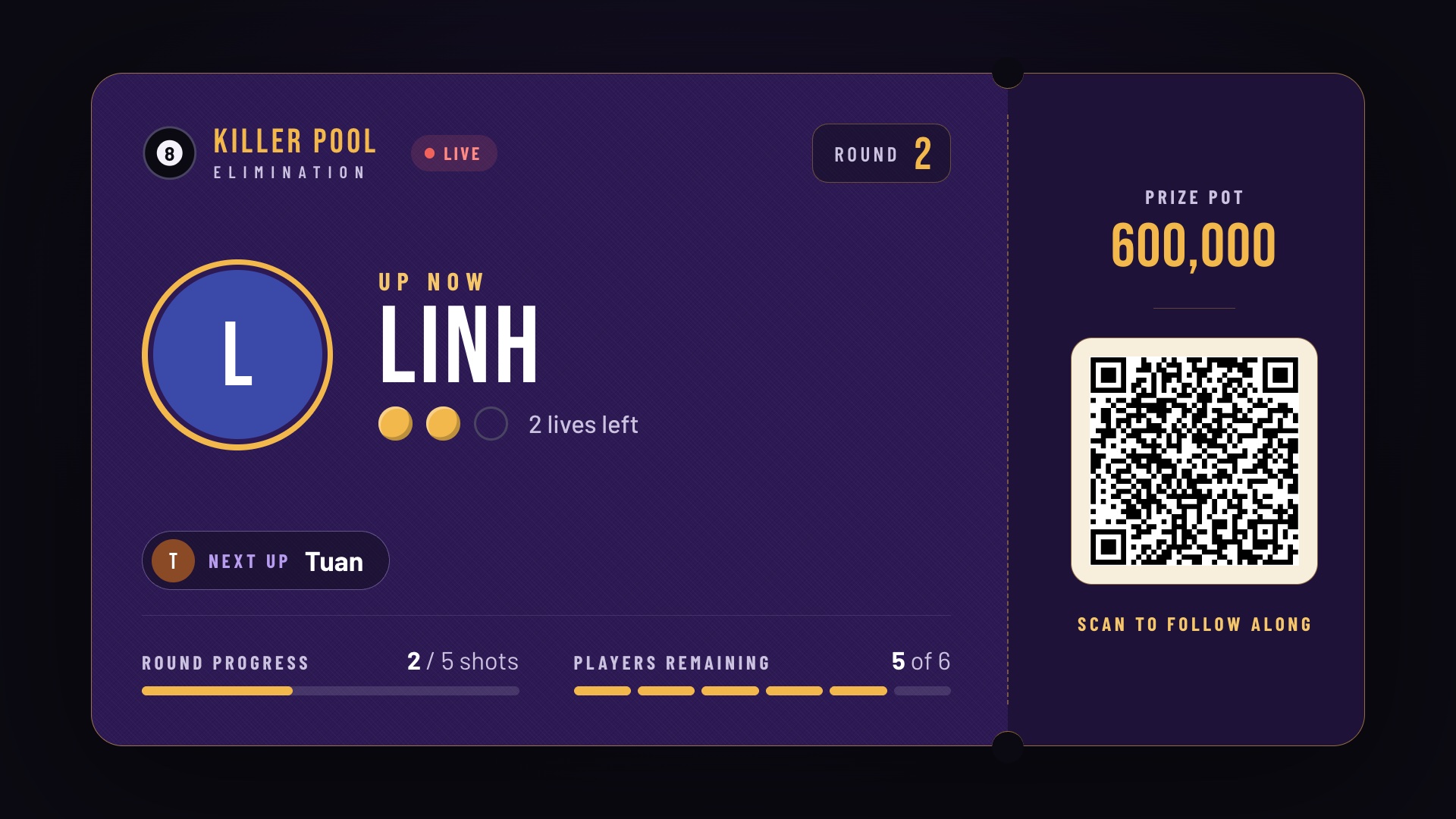 The earlier TV screen: one shooter at a time, everyone else out of sight
The first idea let people join a game in progress remotely.
You can’t join a pool game from your couch. It became information only: see what’s on tonight, with no join button at all.
This time the model came from evidence, not instinct. I looked at live App Store data for ten rival and neighbouring apps. The UK’s leading killer app stops free games at 4 players, and a killer night is 6 to 20. Being free for any group size is the clearest thing I have that they don’t.
Four unrelated features bundled behind one price.
Priced by who has a reason to pay, with free games capped at 12 players.
Tournaments will live inside Killer Pool, not in a second app: about 70% of the parts already exist here. Whether venues and tournaments get built depends on five conversations with pool hall owners in Da Nang.
"I think you missed my turn."
Killer is made for a crowd: many people in one game at the same time, so it's purely social. Many pool halls run Killer Nights to bring people in on slow nights. Classic Killer runs on paper and playing cards.
Cards get forgotten, missed or lost. Turns get argued about. And one organizer carries all of it: the board, the cards, the pot, and every "wait, whose turn is it?"
One game, set up for either crowd: lives, house rules, entry fee and draw cards change per group, so the same app runs a money night and a casual night.
So it's a setting, not a rule: Public turn info lets the organizer hide or show who's next for each game.
I initiated the product, defined its functionality, designed the user experience and interface, and made the key product decisions throughout development. I used AI-assisted development to build, test and iterate on the application, validating decisions in a real pool-hall environment.
I defined what to build, evaluated alternatives, reviewed AI-generated code changes and tested the application in real-world conditions. The code itself was generated by Claude Code, not written by hand. This let me iterate quickly while remaining responsible for the product's functionality and user experience.
The TV screen I loved looked like a poster: one tall, slow, scrolling list, gold on deep purple. Then I ran real games with it, and the room kept asking me the same thing: “Who’s playing next?” Nobody remembers how many lives they have. They glance up, and if the answer isn’t there in one glance, they ask the person with the phone.
So the TV isn’t my screen shown to the room. It’s the room’s scoreboard, read from three metres away by people who are half-listening and looking for one thing: am I next, and am I still alive? Every decision after that answered one question: can you read it from across the room?
Now: the TV at the end of a 14-player game, v1.4. Every player numbered, in order, with the round they went out
The earlier TV screen: one shooter at a time, everyone else out of sight
{{d.trigger}}
{{d.call}}
This time the model came from evidence, not instinct. I looked at live App Store data for ten rival and neighbouring apps. The UK’s leading killer app stops free games at 4 players, and a killer night is 6 to 20. Being free for any group size is the clearest thing I have that they don’t.
Four unrelated features bundled behind one price.
Priced by who has a reason to pay, with free games capped at 12 players.
Tournaments will live inside Killer Pool, not in a second app: about 70% of the parts already exist here. Whether venues and tournaments get built depends on five conversations with pool hall owners in Da Nang.